How to Hide in Steal Or Die
Break sound, break sight, and leave the entity guessing.
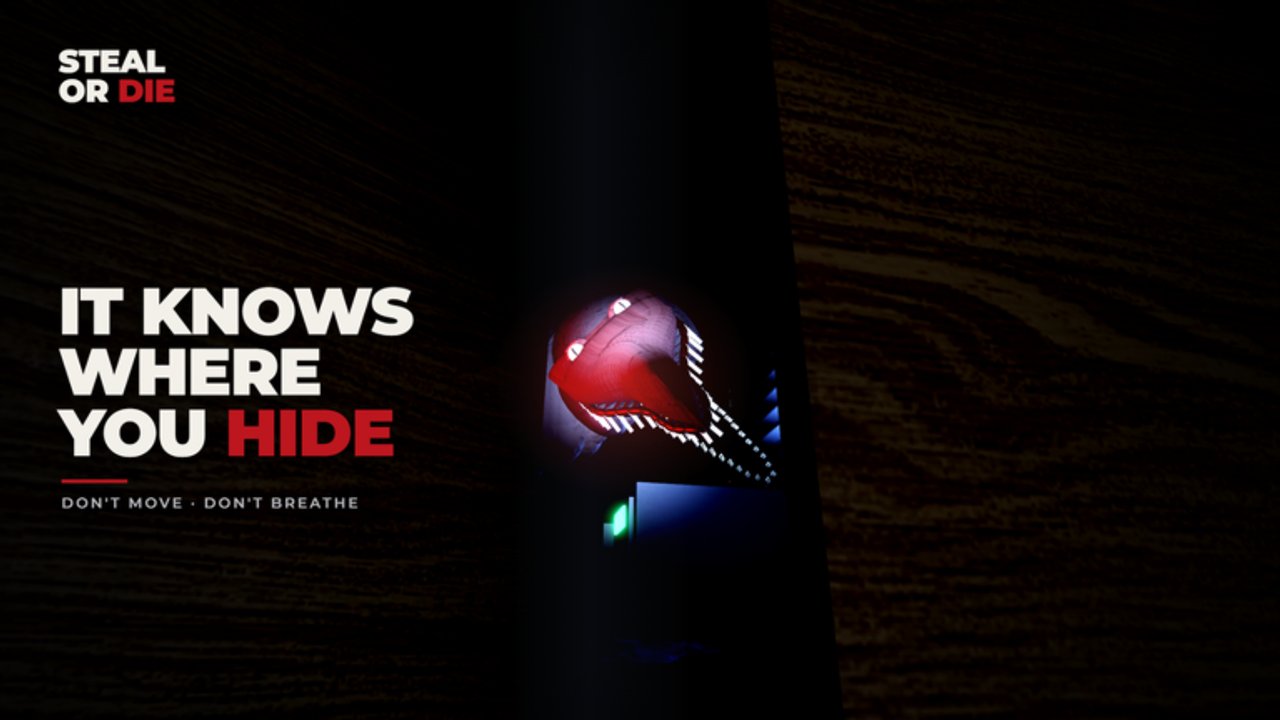
Most Steal Or Die deaths are information failures, not aim failures. The entity does not need perfect pathing if you shout your position with footsteps, voice, and a bouncing flashlight. This guide turns the official hide list — closets, vents, barricaded doors — into a repeatable stealth loop.
Why hiding beats sprinting
Sprint is a resource and a broadcast. On survivor rounds you win by reaching an open exit with banked loot, not by outrunning every chase forever. When the hunter closes distance, your job is to reset information: leave their sight cone, stop making noise, and force them to search rooms the hard way.
Read Getting Started if you still confuse sealed exits with “safe zones.” Hiding does not bank loot; it buys the seconds you need to relocate.
The official hide toolkit
Closets
Closets are the fastest panic button. Use them when the entity is already on your wing and you need an immediate break. Best practices:
- Enter crouched and stay crouched.
- Mute yourself before the door shuts.
- Do not spam emotes or whistles — some emotes create audio.
- Leave through a different doorway than the one the hunter is camping when possible.
Closets fail when you dive in while still lit by your flashlight or while the entity is staring at the door animation.
Vents
Vents are rotation tools, not AFK pods. Many vent entries need a screwdriver and a hold interact to unscrew bolts. Pre-plan vent lines on Facility and Office so you are not learning the prompt during a chase. After you pop out, crouch-walk — vent exits are loud if you sprint immediately.
Barricaded doors
Barricades buy a head start, not immortality. Slam a door, keep moving to a second room, and treat the barricade as a redirect. Skilled human entities listen for the barricade sound and pre-aim the next hallway, so never stand still behind one door.
Sound discipline checklist
- Crouch by default indoors unless you are sure the wing is clear.
- Flashlight discipline: flick on to read a room, off before you move.
- Mic off in closets and vents. The game’s mic indicator is a real tell.
- Throw junk early with hold F if a heavy item is forcing loud footsteps.
- Close doors behind you to slow audio reads and line-of-sight peeks.
Sight discipline checklist
- Break line of sight around corners instead of long straight sprints.
- Avoid open atriums when overweight.
- Use vertical tricks on multi-floor maps — change levels after a hide so the entity searches the wrong story.
- Do not silhouette yourself in bright lobby spill light near exits.
Hide loops that actually work
Loop A — Closet bounce: hear hunter → closet → wait until footsteps pass → exit opposite way → crouch to secondary closet or vent.
Loop B — Vent cut: pre-unscrewed vent → drop chase → emerge two rooms away → grab one light item max → stage toward exit.
Loop C — Barricade fake: barricade → immediately leave through a side room → do not return to the barricaded door.
Practice these on American Dorm first; the residential layout forgives mistakes better than Facility’s long corridors. Map notes live in Maps and Loot.
Counterplay by hunter type
You do not need perfect entity stats to hide well. Use threat identity from the Entities Hub:
- AI entities patrol more predictably — wait out a closet cycle longer.
- Human entities bait sounds — do not answer footsteps with footsteps.
- Long-reach hunters (Hollow-style) punish hugging corners; vent earlier.
- Fast pressure hunters punish overweight greed; dump weight before you hide.
Deep unlock priority for Play As cards sits in the entity tier list.
Rare events and darkness
Community rounds still mention blackout-style pressure. When lights die, slow down harder: fullbright scripts are a crutch (see Scripts), but legal play means memorizing walls and listening. Move room-to-room, not hallway-to-hallway.
Mistakes that get closet campers killed
- Hiding in the first closet beside the loot you just stole
- Re-opening the closet door to “check” every two seconds
- Talking to teammates while the mic indicator is live
- Barricading and AFK scrolling
- Carrying mythic weight into a dead-end closet with no second exit
Link your stealth to progression
Quiet escapes print the cash that buys stamina and backpack upgrades. Spend that cash using the loot tier philosophy: mobility first. If you prefer hunting, graduate to Play as Entity only after you can break contact on command.
Bottom line
Hiding in Steal Or Die is information control. Closets, vents, and barricades are tools; crouch, dark flashlight, and a muted mic are the real meta. Master one bounce loop per map and you will outlive half the lobby without touching a script.
Frequently Asked Questions
Quick answers to the most common questions.
Where can you hide in Steal Or Die?
The official description names closets, vents, and barricaded doors. Learn at least one of each on every map you vote.
Does crouching really help?
Yes. Crouch is the tutorial’s core stealth instruction and still the best default indoors.
Can the entity hear my microphone?
Yes. Treat the in-game mic indicator as a real detection channel and mute while hiding.
Should I hide or run when overweight?
Dump or throw heavy items first, then hide. Overweight sprints are free audio for the hunter.